INVESTIGATION ·
AP Put Its Doubt Up Front for 430 Testimonies Against Hamas, Buried It for the Charges Against Israel
In one story, AP met a 430-testimony report on Hamas's October 7 sexual violence with its 'could not independently verify' caveat up front. In a separate story ten days later, activists accused Israeli forces of sexually abusing detainees, and Al Jazeera and Reuters ran the same kind of caveat two-thirds down.
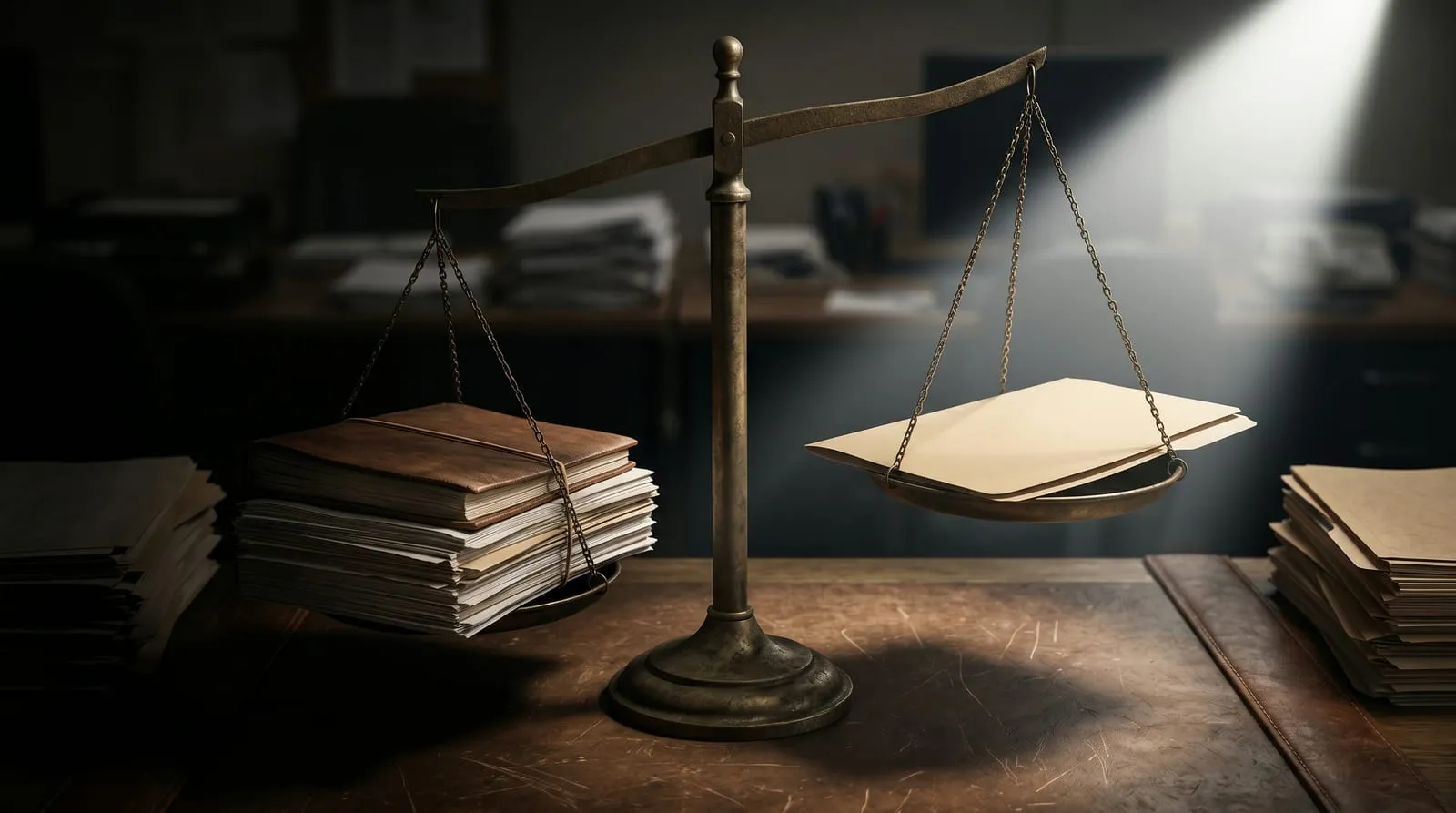
The standard of proof tracked who was accused, not the evidence. AP put its 'we cannot verify' caveat up front over a 430-testimony report on Hamas. Ten days later, activists accused Israel of sexual abuse. Al Jazeera and Reuters ran the same kind of caveat two-thirds down.
A newsroom’s standard of proof can be set by who is accused, not by the weight of the evidence. On May 12, 2026, the Civil Commission on October 7th Crimes by Hamas Against Women and Children released Silenced No More: Sexual Terror Unveiled. This two-year forensic inquiry drew on 430-plus testimonies, more than 10,000 photographs and video segments, and over 1,800 hours of footage. It documents 13 recurring forms of sexual and gender-based violence, committed on October 7 and against hostages in captivity.
The Associated Press called it one of the most extensive investigations of its kind. But in the same breath, it noted that the agency “could not independently verify all of the commission’s findings.” About ten days later, on roughly May 22, 2026, organizers of the Global Sumud Flotilla and the Palestinian legal-aid group Adalah alleged that Israeli forces had sexually abused detainees. Those claims led the flotilla coverage, and the verify-caveat was buried late, beneath a headline built on the word “allege.”
That is the whole story — not whether either caveat exists, but where each one sits. For Hamas’s recorded crimes, the caveat is put up front, and the forensic record must climb past it. For unverified accusations against Israel, the claim leads and the caveat is buried. The gap is one of prominence, and in these two stories it tracked the identity of the accused.
What the Civil Commission actually documented
The Civil Commission is not a government body. It is an Israeli civil-society group, and an openly advocacy one. Its chair, Dr. Cochav Elkayam-Levy, is a 2024 Israel Prize laureate. The Hebrew University of Jerusalem recognized her for raising awareness of these crimes — the ones Hamas committed on and after October 7, 2023, the day Hamas started this war.
So the report’s case cannot rest on the Commission being neutral. It rests on what an outsider can check: the documented scale, and an outside review that reached the same finding.
The report’s scale is the point. As the Commission states, and as Euronews confirmed on its own, the two-year inquiry drew on more than 430 testimonies and interviews. It also gathered over 10,000 photographs and video segments. These add up to more than 1,800 hours of visual material. The victims came from 52 different nationalities.
It catalogued 13 recurring forms of sexual and gender-based violence. Among them: rape, gang rape, sexual torture, forced nudity, mutilation, and assaults carried out in front of family members.
Its conclusion was not tentative at all. The violence was “systematic,” “widespread,” and “integral” to the attack and to the hostage-taking that followed. The Commission called this conduct a set of potential war crimes, crimes against humanity, and genocidal acts under international law.
The document carries the weight that serious people demand before they will take a finding seriously. Its foreword was written by Irwin Cotler of the Raoul Wallenberg Centre for Human Rights. Cotler is Canada’s former attorney general. He is one of the world’s most honored human-rights jurists.
The Centre’s own statement draws one line clearly, and the line matters. Cotler wrote the foreword. A separate group of endorsers lent their names. They include Hillary Clinton, David Crane, Katrina Lantos Swett, Sheryl Sandberg, and Alice Wairimu Nderitu. Crane is the founding chief prosecutor of the Special Court for Sierra Leone. Nderitu is the former UN Special Adviser on the Prevention of Genocide.
We separate the two roles on purpose. Blur them, and a critic can wave off the endorsers as names that lent prestige without vetting the report; an ally can inflate them into co-authors. Either way, the 430-testimony record stands on its own, whoever lent a name to it.
What the AP did with it
The AP did cover the report. It even noted the report’s heft. It called the work one of the most extensive investigations into claims of sexual violence during the attacks. But it framed that heft with a hedge, and it placed that hedge up front: the agency “could not independently verify all of the commission’s findings.”
HonestReporting documented a second move. The AP also told readers that critics had “challenged” the chair’s previous work — a reference to disputes over some of Elkayam-Levy’s earlier public statements about October 7. Take that caveat at full strength: her personal credibility is a fair thing for readers to weigh.
But watch what AP did with it. It let a fight about her past statements stand in for the reliability of this report. The two are not the same thing. This record does not rest on her say-so. It rests on 430-plus testimonies, more than 10,000 images, 1,800 hours of footage, and an independent Euronews check that reached the same finding. That forensic chain stands or falls on its own documents, whatever one makes of the chair’s earlier claims.
AP owed its readers one more fact and withheld it: Elkayam-Levy is a 2024 Israel Prize laureate, honored for raising awareness of these crimes. That is not proof the report is accurate — an advocacy honor cannot answer an accuracy question. It is the missing half of AP’s own aside. If you print the challenge to her prior work, you print the recognition too.
Notice the setup here. A 430-testimony, 10,000-image, 1,800-hour forensic record reaches the reader through just one lens: what the wire service cannot vouch for.
The caveat is fair on its face. No outside agency had re-run the Commission’s full chain of custody. On its own, then, it would be the sort of caution we expect. It becomes telling only when the same skeptical instrument — the verify-caveat — is applied to the mirror-image story and lands in the opposite place. A Western wire sits on both sides of that comparison: AP over the Hamas report, Reuters over the Israel accusations. So this is not one outlet’s quirk.
What happened ten days later
The Global Sumud Flotilla was a Gaza-bound activist maritime convoy; Israel intercepted it and detained those aboard. On or about May 22, 2026, freed flotilla activists alleged that Israeli forces had abused and sexually assaulted them in detention. The figures come from the flotilla’s own organizers. They also come from testimony that was gathered by Adalah and volunteer lawyers.
As the Jerusalem Post reported, those lawyers visited Ashdod Port and counseled detainees while taking their accounts. That is an activist-aligned legal team, not a neutral fact-finding body.
Organizers asserted at least 15 cases of sexual assault. The worst was alleged aboard a single converted vessel, including a claim of “forcible penetration by a handgun.” The Israel Prison Service flatly denied the claims. It called them “false and entirely without factual basis.”
These are claims. They are sourced to the accusers and to their counsel. They are not findings, and we report them as the claims they are.
Here is the boundary this piece will not cross: the verify-caveat was present in that coverage. Al Jazeera’s headline used “allege.” Roughly two-thirds of the way down its report came this sentence:
Israel’s prison service denies the allegations of abuse, and Al Jazeera was not able to verify any claims independently.
Reuters, carried by outlets including NBC News (US network), printed “was not able to verify them independently.” No one fully buried the disclaimer. That is not the charge.
The charge here is placement. In the Hamas story, the caveat is the frame the evidence must climb out of. In the Israel story, the caveat is a footnote the claim has already cleared.
And the “allege” headline does not fill the gap. A newsroom cannot print an unproven charge as fact. It must say someone “alleges” it, so “allege” is a forced verb, not a chosen doubt. The verify-caveat is different. No rule forces it onto the page. The editor chooses to run it, and chooses where. So the placement of that caveat — not the forced “allege” — measures which story the newsroom set out to doubt.
One record runs to nearly 300 pages, 430 testimonies, and two full years of forensic work. It is met with “we cannot verify all of this.” The other rests on accounts gathered by the accusers’ own lawyers, and HonestReporting reports that those named accounts shift and do not add up. Hold the placement point in front: the heavy, tested record drew the prominent caveat; the thin, untested accounts did not. That gap is the charge — not any verdict of ours on what happened to anyone.
We are not declaring those accounts false. We cannot, and the point does not require it. The point is that they led, and the forensic record trailed its own caveat. What gets believed here depends on who the accused is.
Why this is the laundering pattern, not a coincidence
The reflex cannot be seen from inside a single article. Each caveat holds up on its own. Each “allege” is technically correct. Each placement call can be explained away by a friendly editor.
One honest objection deserves a straight answer: maybe this is just news form. A finished report earns a caveat up front. Breaking allegations run the claim first, then the caveat. That shape has a name: the inverted pyramid. It would be an innocent explanation — if it fit. But inverted-pyramid convention puts the heaviest doubt on the thinnest evidence. Here the order runs backward. The 430-testimony, two-year record drew the prominent caveat; the untested accusations, gathered by the accusers’ own lawyers, did not. News form cannot explain a doubt that grows lighter as the evidence grows heavier.
The pattern only appears when you lay the two stories side by side. Watch the same word — verify — slide from the front of the page to the back. The one thing that moves it is the nation of the defendant.
That slide is how a frame gets laundered into “neutral” journalism. No one writes “we trust accusations against Israel more than we trust evidence against Hamas.” They do not have to.
They simply move the caveat, and the reader’s eye does the rest. The Hamas finding reads as a contested one; the Israel accusation reads as a reported fact.
We have shown this in two stories, not across a slate. Whether the same placement pattern runs through the wider coverage is a hypothesis this single comparison cannot prove. But if it holds, the effect compounds. The press would aim its hardest doubt exactly where the evidence is heaviest. And it would relax that doubt exactly where the evidence is thin, and where it was gathered by the accuser’s own backers.
That is not a standard of proof. It is a standard of identity.
MissingBridge’s position is the one that the evidence supports. A nearly-300-page forensic record, built over two years, deserves to be reported as the most heavily backed thing in the room. It should not be reported as the thing the wire service cannot vouch for.
Then there is the charge. It was collected by the accusers’ own lawyers. Its named accounts contradict each other, and a flat official denial stands against it.
It deserves the word “allege” in the lede. And it deserves the caveat where the reader will see it — not two-thirds of the way down.
Methodology and the conditions that would force a revision
This is an investigation, and it carries its own falsifier right on its face. The central claim is a narrow and specific one.
In AP’s coverage, the verify-caveat was foregrounded over the Civil Commission’s findings. In the flotilla coverage of Al Jazeera and Reuters, it was buried late, beneath the charge. The gap is one of prominence, not of presence.
What counts here as direct evidence:
- The Civil Commission report and its scope figures.
- The Raoul Wallenberg Centre confirmed who wrote the foreword and who only endorsed.
- Euronews’s independent check of the report’s findings and scale.
- The verbatim AP caveat: “could not independently verify all of the commission’s findings.”
- The verbatim Al Jazeera caveat, and its placement two-thirds into the piece.
- The verbatim Reuters caveat.
- The Israel Prison Service’s denial.
- HonestReporting’s record of the double standard and of the flotilla accounts’ own contradictions.
What counts as our inference, not fact: the placement pattern shows a newsroom reflex keyed to the identity of the accused. We do not assert that any one editor intended the asymmetry. We do not assert that the flotilla allegations are disproven. We assert only this: the named accounts contradict each other and stay unverified, yet they led the flotilla coverage.
We would revise or retract this piece if any of the following were shown:
- That the AP caveat was not in fact placed ahead of the Commission’s findings.
- That Al Jazeera or Reuters placed the verify-caveat in the lede or headline of the flotilla coverage, rather than late. That would dissolve the gap in prominence.
- That the Civil Commission report does not exist at the scale described, or that Elkayam-Levy is not a 2024 Israel Prize laureate.
- That an independent body — not the accusers’ own counsel — confirmed the specific flotilla assault claims.
Corrections are published on this article, with a date and a severity, per our standing policy.
Where to check every claim
Read the Civil Commission’s report and its methods section. Then read Euronews’s independent write-up of the same findings. Two sources, one record, the same scale.
The Hebrew University announcement confirms the chair is a 2024 Israel Prize laureate — the context AP left out. The Raoul Wallenberg Centre page confirms that Irwin Cotler wrote the foreword. It also confirms that Clinton, Crane, Lantos Swett, Sandberg, and Nderitu were endorsers — separate roles, not to be conflated.
For the AP’s framing, read HonestReporting’s “AP Shifts Attention Away From Israeli Victims of Sexual Violence.” It carries the verbatim caveat, attributed to AP. Per the wire-service archiving problem, the AP copy is cited in prose, not in our published source list.
For the flotilla side, there are two caveats that form the core evidence of placement. The first is the verbatim Al Jazeera caveat: “Al Jazeera was not able to verify any claims independently.” It was placed roughly two-thirds into the piece, under an “allege” headline.
The second is the verbatim Reuters caveat, carried by NBC News. Both of them are cited in prose, because wire and large-platform pages do not archive cleanly.
HonestReporting’s “Flotilla Fabulists” lays out the contradictions in the named flotilla accounts. The Jerusalem Post’s coverage shows the testimony was gathered by Adalah and volunteer counsel at Ashdod Port.
Read the AP’s report. Read Al Jazeera’s. Then ask one question of each: where did the editor put the word verify — and what does that placement tell you about who they decided to doubt?
The press does not earn trust by reciting a caveat. It earns trust by applying the same caveat with the same prominence, regardless of who stands accused. When the disclaimer leads for one nation’s recorded crimes and trails for another nation’s unverified accusations, it has stopped doing journalism’s work. It has started doing a movement’s.
The record is in public. On one side, there is a nearly-300-page forensic inquiry, with 430 testimonies, 10,000 images, and 1,800 hours of footage. It carries an Israel Prize laureate’s name and Irwin Cotler’s foreword. All of it was met with “we cannot verify all of this,” up front. Ten days later, the other side came along. It was a set of accusations, gathered by the accusers’ own lawyers. They did not match their own retellings. The prison service denied them as “false and entirely without factual basis.” All of it led the headline, with the caveat buried two-thirds down. Same word. Different defendant. Different page.
Read with us. Share when we earn it. Tell us when we miss.
Sources (6)
- [1]
Civil Commission on October 7th Crimes by Hamas Against Women and Children · 2026-05-12 · ✓ verified
Primary source: the report's title and scope — 10,000+ photos and video segments, 1,800+ hours of footage, 430+ testimonies, 52 nationalities, 13 recurring forms of sexual and gender-based violence — and its war-crimes / crimes-against-humanity conclusion.
https://www.civilc.org/silenced-no-more archive · 2026-06-03 - [2]
Raoul Wallenberg Centre for Human Rights · 2026-05-12 · ✓ verified
Confirms Irwin Cotler wrote the FOREWORD; lists the endorsers — Hillary Clinton, David Crane, Katrina Lantos Swett, Sheryl Sandberg, Alice Wairimu Nderitu and others — as a separate group, not authors or foreword writers.
https://www.raoulwallenbergcentre.org/en/news/2026-05-12-1 archive · 2026-06-03 - [3]
Euronews · 2026-05-13 · ✓ verified
Independent corroboration of the report's 'systematic, widespread, integral' finding and its ~290-page scale, 430+ testimonies, 10,000+ photos/videos, 1,800+ hours, 52 nationalities, and 13 documented forms of violence.
https://www.euronews.com/2026/05/13/hamas-systematically-used-sexual-violence-in-7-october-attacks-report-finds archive · 2026-06-03 - [4]
HonestReporting · 2026-05-14 · ✓ verified
Documents the double standard: AP inserted skeptical caveats before the Civil Commission's findings and noted critics 'challenged' the chair's prior work, while accusations against Israel are not described with such qualifying treatment up front.
https://honestreporting.com/ap-shifts-attention-away-from-israeli-victims-of-sexual-violence/ archive · 2026-06-03 - [5]
HonestReporting · 2026-05-27 · ⚠ disputed
Documents internal contradictions in named flotilla accounts: Neve O'Connor's shifting versions of where and how she was assaulted, and Juliet Lamont's 'five men / torture chamber' claim alongside no visible bruising — accounts that ran as lead coverage.
https://honestreporting.com/flotilla-fabulists-how-activists-manufacture-atrocity-propaganda/ archive · 2026-06-03 - [6]
Hebrew University of Jerusalem · 2024-01-01 · ✓ verified
Confirms Dr. Cochav Elkayam-Levy is a 2024 Israel Prize laureate (Solidarity category), awarded for raising awareness of the crimes Hamas committed on and after October 7 — context AP omitted when noting critics 'challenged' her prior work.
https://en.huji.ac.il/news/dr-cochav-elkayam-levy-awarded-israel-prize-her-work-raise-awareness-hamas%E2%80%99-crimes archive · 2026-06-03